
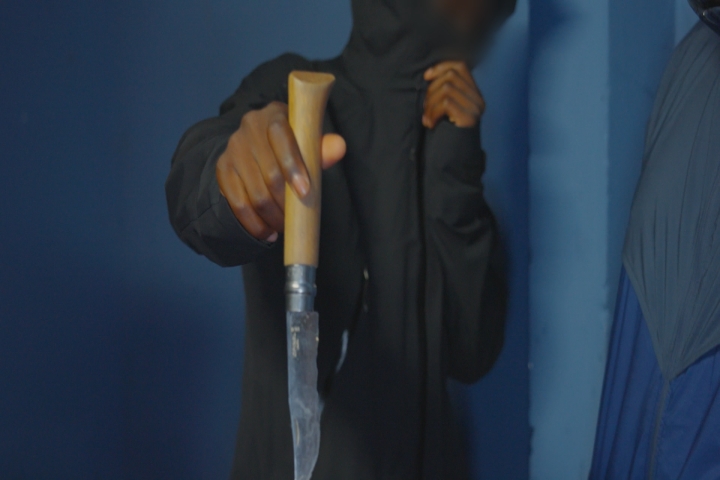
- 52'
- Author : Karim Ouaffi
- 01-02-2026
- Master : 3708
-
Share!
BRAWLS, MURDERS: INSIDE THE SURGE OF YOUTH HYPERVIOLENCE | M6 | Enquête Exclusive
Fights, retaliation, revenge… today, as in the past, young people want to settle scores.
But violence is becoming extreme — with knives, hammers, machetes — and tragic incidents are multiplying.
Every year, teenagers are killed or seriously injured over a phone, a look, a romantic dispute, or a simple misunderstanding.
And the attackers are getting younger and younger.
According to France’s Ministry of Justice, intentional assaults account for:
21% of cases involving minors in 2022,
and 7 to 9% of suspects in homicide cases each year.
In 2024 alone, 10,397 knife attacks were handled by the police — not including cases dealt with by the Paris Police Prefecture or the gendarmerie.
“What’s worrying is the motive behind these acts of violence — that’s what’s changed compared to previous years: the reasons are increasingly trivial,” explains a frontline police officer.
Who are these young people?
Why are they fighting?
And is there any way to stop this spiral?
An investigation into groups that seem increasingly out of control.
No region in France is spared by this epidemic of violence. We revisit the recent killing of a high school student stabbed by a fellow pupil in Nantes; the death of Thomas, beaten after a party in Crépol in the Drôme; and the assault on Shemseddine outside his middle school in Viry-Châtillon.
We also embed with a group of teenagers in Meaux who are repeatedly involved in violent clashes.
Why this urge to lash out — at the risk of seriously injuring or even killing someone their own age?
How does their use of TikTok or Snapchat, where they display their strength and issue threats, fuel the pressure and escalate tensions?
In the fight against this violence, we examine how police operate on the ground. We go on immersion with a specialized police unit in Sainte-Geneviève-des-Bois, in the Essonne department.
In coordination with middle and high schools, we document bag-search operations — unthinkable just a few years ago — and the ways some schools now work closely with law enforcement, parents, and even local shopkeepers to defuse conflicts.
On the judicial side, we spend several days with juvenile court judge Esther Macle at the Bobigny courthouse, who now deals almost exclusively with cases of youth violence.
Finally, in sensitive neighborhoods in Essonne and Loire-Atlantique, we see how community groups — from “Angry Mothers” to “Concerned Big Brothers” — try to calm rising tensions by offering activities to “learn how to talk instead of hitting,” or by stepping in as mediators to cool things down.